

Key Takeaways
- Choose window tint for comfort, visibility, and compliance, not darkness alone.
- Florida measures the final glass-and-film result, so the film percentage on its own is not the legal answer.
- Longwood drivers should consider harsh Central Florida sun, afternoon glare, summer storms, and nighttime visibility.
- Ceramic film can offer strong heat control without requiring an extremely dark shade.
- Professional measurement, installation records, and compliance labeling help prevent avoidable problems.
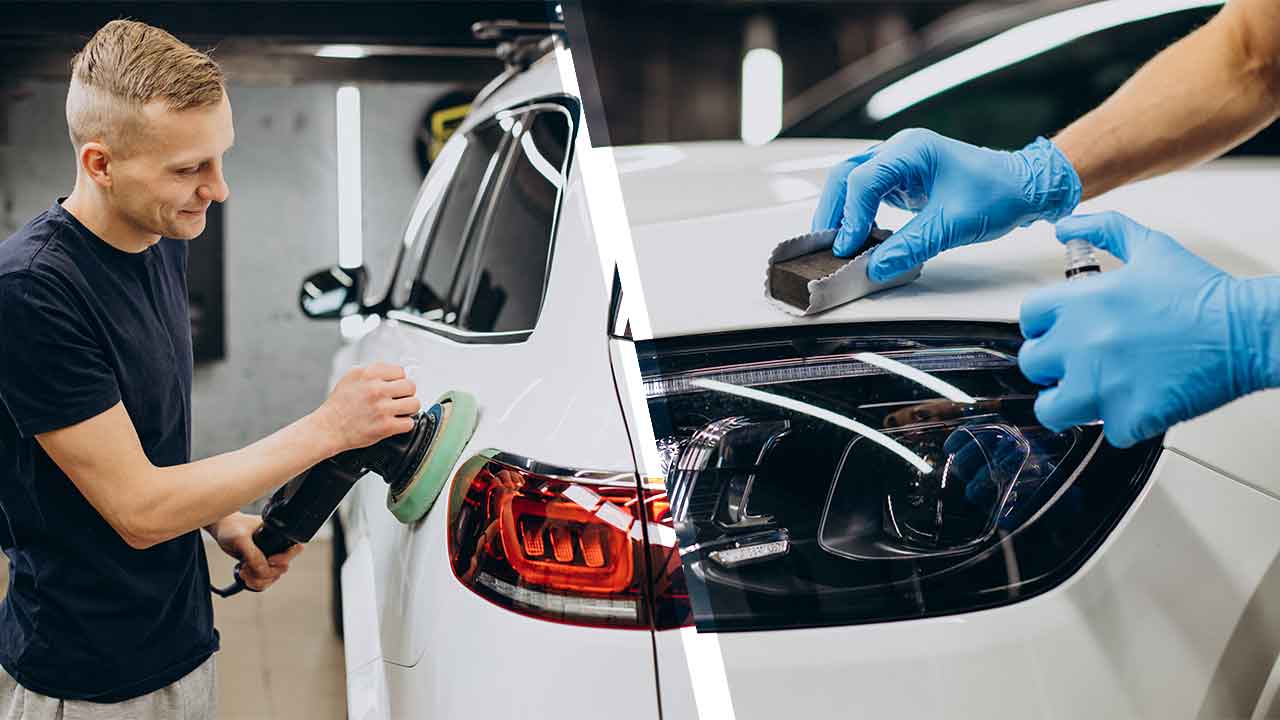
In Longwood, Florida, window tint is about more than giving a vehicle a finished look. Daily drives along I-4, State Road 434, and local streets can mean intense sun, reflective wet pavement, and hot interiors. For vehicle owners also considering ceramic coating for cars in Longwood, FL, tint can complement an overall plan to protect the cabin and make time behind the wheel more comfortable. The smartest tint choice balances heat rejection, glare control, privacy, appearance, and safe visibility after dark. A film that looks great in a sunny parking lot may be too dark for a rainy evening drive through Seminole County, especially when pedestrians, cyclists, lane markings, and unlit vehicles are harder to see.
Why Tint Choice Takes More Than Picking a Dark Shade
Two films with the same visible darkness can perform very differently. Basic dyed film is usually selected for appearance and entry-level glare reduction. Carbon film often provides a more stable color and a matte look. Ceramic film is designed to manage infrared heat while preserving a clearer view, which can be valuable for Longwood commuters who leave home before sunrise or return after dark. A lighter, higher-performing film may keep the cabin more comfortable than a darker budget film while allowing better visibility. That distinction matters during Florida’s frequent heavy rain, when reduced light and wet-road reflections can make already-dark windows feel even darker. Drivers searching for automotive ceramic coating near me may also want to evaluate window film as part of a practical vehicle-care plan. Still, each upgrade should be chosen for its specific purpose. Coating protects painted surfaces, while tint is primarily about solar control, glare, privacy, and cabin comfort.
What VLT Means on a Tint Label
Visible light transmission, commonly abbreviated as VLT, describes how much visible light passes through a window. A lower number creates a darker appearance. For example, a 20 percent VLT result allows less light through than a 50 percent result. The important detail is that Florida considers the final reading of the specific vehicle’s glass with the film installed. Factory glass already filters some light, so applying a film labeled 30 percent does not necessarily result in a final VLT of 30 percent. This is why a meter reading after installation is more useful than selecting a shade by label alone.
Florida Tint Rules Longwood Drivers Should Check
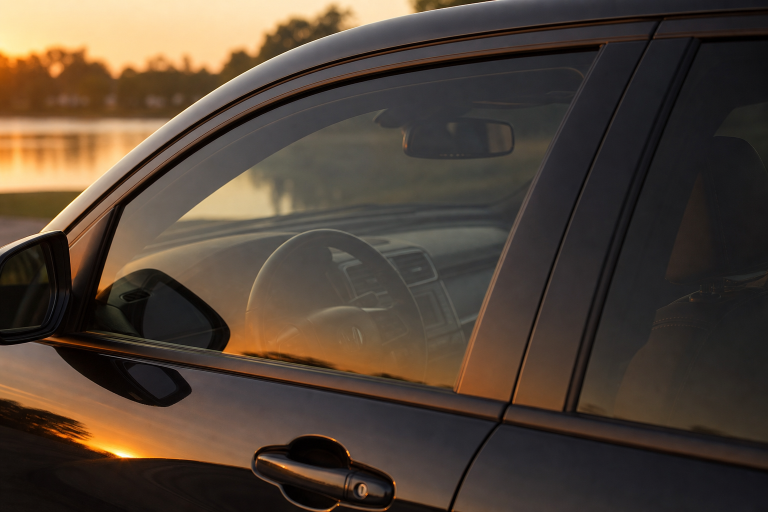
Florida law distinguishes between front-side windows, rear windows, windshield coverage, and vehicle classifications. Under the current Florida tint statute, front side windows must have at least 28 percent visible light transmission and no more than 25 percent visible light reflectance when tested on the vehicle.
- Front side windows: At least 28 percent VLT, with reflectivity limited to 25 percent.
- Windows behind the driver: Standard passenger vehicles generally require at least 15 percent VLT and limit reflectivity to 35 percent.
- Multipurpose passenger vehicles: SUVs, vans, and certain trucks may use darker rear film, down to 6 percent VLT, when they meet the applicable requirements.
- Windshield: Tint is generally limited to a transparent strip at the top that does not intrude into the driver’s direct forward viewing area.
- Rear visibility: If the rear glass is darkened, confirm that the vehicle has the required exterior mirrors and that rearward visibility remains practical.
Florida also provides a measurement tolerance, but it is wiser to leave a reasonable margin rather than select film that barely meets the tolerance. Medical exemptions may apply in certain circumstances, but drivers should confirm eligibility and documentation requirements before relying on one.
How Vehicle Type and Factory Glass Affect the Result
A sedan, SUV, pickup, and minivan may not be treated the same way by the driver. Before ordering film, identify the vehicle classification and check whether its rear windows already use factory privacy glass. Factory privacy glass can make rear passengers less visible from outside, but it may not provide the same heat rejection or UV performance as quality aftermarket film. Adding dark film over factory privacy glass is a common mistake. The combined result can become substantially darker than expected, making nighttime mirror checks more difficult. Matching the front windows to factory rear glass may also require a lighter film than many drivers initially assume.
Choosing the Right Film for Your Goal
For Heat and Interior Protection
Compare infrared rejection, total solar energy rejection, UV protection, and color stability. Ceramic film is often a strong choice for drivers who want heat control without relying on the darkest legal shade.
For Glare and Daily Comfort
Choose a shade that reduces harsh morning and afternoon glare without compromising visibility during thunderstorms, at dusk, or at night. This is especially important on wet roads around Longwood, where headlights and streetlights can reflect sharply.
For Privacy and Appearance
Use the darkest practical legal option for each window location, but avoid mirrored or overly reflective film. A neutral color tone can create a cleaner match between front windows and factory rear privacy glass.
A Simple Tint Selection Process
- Decide whether heat reduction, glare control, privacy, appearance, or UV protection is the top priority.
- Inspect the existing glass, particularly the rear factory privacy glass.
- Review the legal requirements for the vehicle type and each window position.
- Compare VLT, reflectivity, heat-rejection specifications, warranty coverage, and signal compatibility.
- Select a practical shade with room below the legal limit.
- Request a final VLT measurement after installation.
- Keep the compliance label, film information, and installation documentation.
Questions to Ask Before Installation
- What final VLT reading should I expect on my specific vehicle?
- Does this film meet Florida’s reflectivity limits?
- Will it affect GPS, mobile service, radio, or toll-transponder performance?
- How long should the windows remain closed while the film cures?
- What cleaners and cloths are safe to use?
- What does the warranty cover for bubbling, peeling, fading, haze, or color change?
Frequently Asked Questions
Is window tint legal in Florida?
Yes. Tint is legal when it meets the applicable light-transmission, reflectivity, placement, and vehicle-type requirements.
Is ceramic tint worth the higher price?
It can be worthwhile for drivers who prioritize heat rejection, clarity, and long-term color stability. It is not automatically necessary for every budget, so compare measurable performance rather than relying on product names alone.
How long does a car window tint last?
Lifespan depends on film quality, installation, sun exposure, and cleaning habits. Bubbling, purple discoloration, peeling edges, shrinking, and haze are common signs that film may need replacement.
Choose Tint That Fits Life in Longwood
The best tint for a Longwood vehicle is not always the darkest option. By accounting for Florida law, factory glass, Central Florida heat, stormy-night visibility, and the film’s actual performance, drivers can improve comfort and privacy without creating unnecessary safety or compliance concerns.
Conclusion
Choosing window tint in Longwood is ultimately about finding the right balance between comfort, visibility, privacy, and Florida compliance. Drivers should consider the vehicle’s existing glass, final VLT measurement, film performance, and everyday conditions before installation. High-quality ceramic film can provide strong heat and UV control without requiring an excessively dark appearance, while proper measurement and professional installation help avoid compliance and visibility problems. Regular aftercare also helps maintain the film’s clarity and appearance over time. By selecting a practical shade with Florida’s requirements in mind and considering how the vehicle is driven in bright sunlight, during heavy rain, and at night, Longwood drivers can enjoy a cooler, more comfortable cabin while maintaining clear, confident visibility on the road.